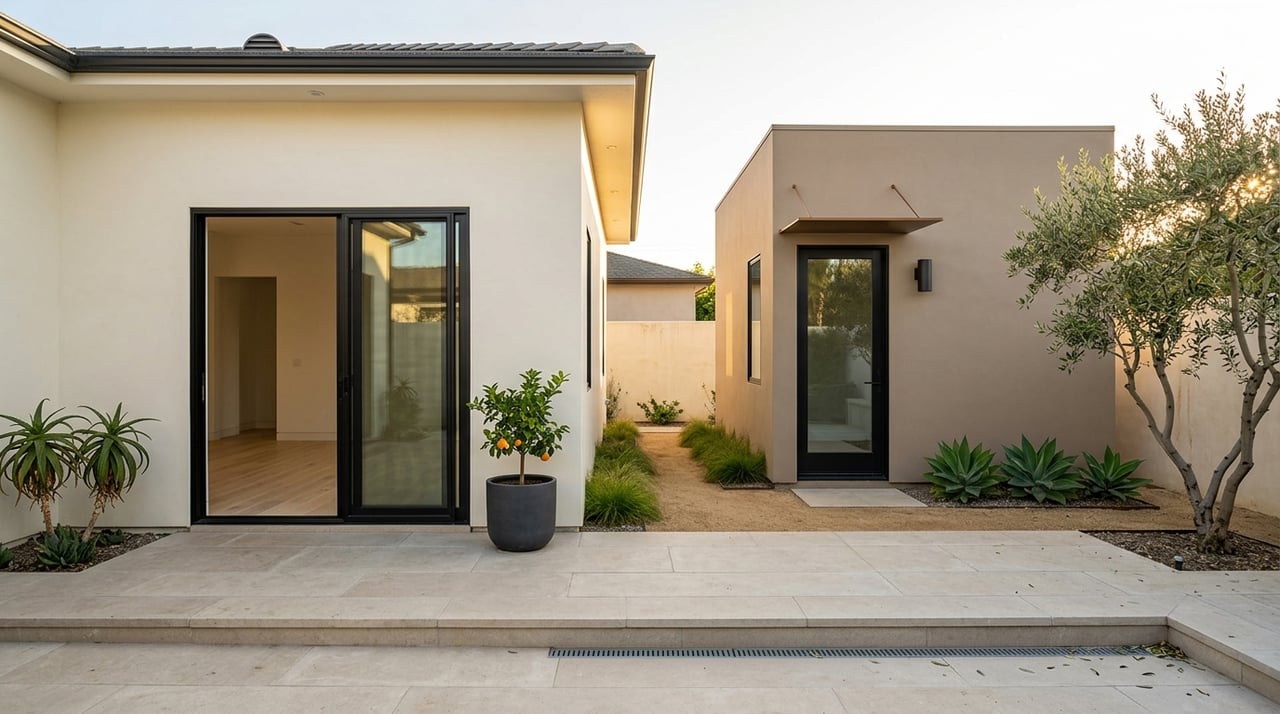
Wondering if an ADU could make multigenerational living easier on your San Diego property? You are not alone. Many homeowners want to stay close to parents, adult children, or extended family without giving up privacy, independence, or long-term flexibility. The good news is that San Diego gives you real options, but the right path depends on your lot, your goals, and the city rules that apply to your property. Let’s dive in.
Why ADUs work for multigenerational living
An accessory dwelling unit, or ADU, can be a smart fit when your family wants to live near each other while still maintaining separate living space. California Housing and Community Development says ADUs can support extended families, help with aging in place, and create possible rental income for homeowners.
For many households, that balance matters most. You may want a parent nearby for daily support, a college-age child to have more independence, or a flexible space that serves family now and rental use later. An ADU can make that possible in a way that feels practical and future-focused.
ADU vs. JADU in San Diego
Before you plan layouts or budgets, it helps to know whether an ADU or a JADU better fits your needs. In San Diego, the city defines these as different housing types, and that difference affects size, use, and occupancy rules.
What makes an ADU different
A San Diego ADU can be attached or detached, and it must include complete independent living facilities. That means living, sleeping, eating, cooking, and sanitation facilities in one self-contained unit. An ADU can be up to 1,200 square feet.
If your goal is a more private, fully separate residence for a parent, adult child, or long-term guest, an ADU is often the better fit. It is designed to function as a true standalone home, even when it sits on the same lot as the main house.
What to know about JADUs
A junior accessory dwelling unit, or JADU, is smaller. In San Diego, a JADU ranges from 150 to 500 square feet and must be located within an existing or proposed single-family home or attached garage, with a separate exterior entry and a kitchen or efficiency kitchen.
A JADU may work well if you want a compact semi-independent living space. It can be useful when proximity is the priority, but it is usually less private and less flexible than a full ADU.
Key differences at a glance
| Feature | ADU | JADU |
|---|---|---|
| Size | Up to 1,200 sq. ft. | 150 to 500 sq. ft. |
| Location | Attached or detached | Within home or attached garage |
| Facilities | Full independent living facilities | Kitchen or efficiency kitchen required |
| Rental term | 31+ consecutive days | More than 30 days |
| Owner occupancy | Generally no owner-occupancy rule | Usually owner must live on-site |
For multigenerational planning, this distinction is important. If you want a parent or adult child to have a complete residence with more independence, an ADU is usually the stronger option.
Start with your family’s real goals
The best ADU plans begin with lifestyle, not just square footage. You should first decide who the unit is for now, how often they will use it, and whether your long-term plan could change.
For example, you may need space for a parent who wants privacy but may need easier access over time. Or you may be planning for an adult child now, with the idea of using the unit as a long-term rental later. Those choices can affect whether you build detached, convert a garage, or add onto the main home.
Questions worth answering early
- Who will live in the unit now?
- Could the use change in five to ten years?
- Is privacy more important than proximity?
- Do you want easier caregiving access?
- Would future rental flexibility matter?
- Does the resident need mobility-friendly design features?
These answers can guide the entire project, from the floor plan to the permit path.
Popular ADU approaches in San Diego
San Diego homeowners usually consider three common paths for multigenerational living. Each one offers different tradeoffs in cost, privacy, and site impact.
Detached backyard ADU
A detached ADU often provides the most independence. It can feel more like a small private home, which is appealing when you want separation between households.
This approach can work especially well for aging parents, adult children, or long-term guests who want their own routines and space. It may also support stronger future flexibility if you later decide to use the unit differently.
Garage conversion ADU
A garage conversion can be a lower-impact option because it uses existing space. In many cases, this can simplify site planning compared with building a new detached structure.
San Diego also notes that garage or carport conversion generally does not trigger replacement parking. That can make this route more attractive for homeowners who want to avoid bigger site changes.
Attached addition ADU
An attached ADU may make sense when you want family nearby with easier daily access between living spaces. This can be helpful for caregiving situations or households that prefer closer connection.
At the same time, an attached plan can still offer separate living space if designed well. The key is making sure the unit functions as an independent residence under city rules.
San Diego site rules can shape feasibility
Not every lot supports every ADU idea the same way. In San Diego, zoning, overlays, setbacks, fire conditions, and project type all affect what is feasible.
One of the first things to confirm is whether your parcel is in the Coastal Overlay Zone. The city notes that some ADU regulations do not apply there, so location matters from the beginning.
Setbacks and height matter
For new detached ADUs, San Diego allows some encroachment into side and rear setbacks. But if the structure exceeds 16 feet and abuts residential property, a 4-foot interior side and rear setback can apply.
In Very High Fire Hazard Severity Zones, that 4-foot setback applies regardless of height. The city also limits detached ADUs on lots that allow single-family development but not multifamily development to two stories.
Parking may be easier than expected
Many homeowners assume parking will be a major obstacle. In San Diego, that is not always the case.
Outside the Coastal Overlay Zone, the city says no parking spaces are required for ADUs, and JADUs also require no parking spaces. In the coastal Beach Impact Area of the Parking Impact Overlay Zone, one off-street space can be required unless an exception applies.
Historic and coastal review can add steps
If your property is in a historic district or includes a structure that is 45 years old or older, the city may require historic review. If your property is in the Coastal Overlay Zone, a Coastal Development Permit may also be required depending on the project.
That is why early parcel review is so important. Two properties in the same general area can have very different review paths.
Design for privacy and accessibility
A multigenerational ADU should work well today and still make sense later. That is why privacy and accessibility deserve attention early in the planning process.
California HCD highlights aging in place as one of the benefits of ADUs. If an older parent may live in the unit, it can help to think ahead instead of waiting for mobility needs to become urgent.
Smart features to consider
- Step-free access where possible
- A bedroom and bathroom on the main living level
- Wider circulation paths
- Bathroom features that can adapt over time
- A layout that preserves privacy for both households
San Diego also identifies an accessible ADU option in its bonus program that includes an accessible bathroom, kitchen, bedroom, and accessible route. Even if you are not planning around accessibility today, these features can improve long-term usability.
Budget beyond construction costs
A realistic ADU budget should include more than labor and materials. In San Diego, project costs can also include plan review, development impact, water and sewer, school, and inspection fees, depending on the project type.
You should also account for building-system requirements. The city notes that newly constructed detached, non-manufactured ADUs are subject to solar requirements, while ADUs created within existing space or as additions are not.
That distinction can influence your design choice. A detached new build may offer more privacy, while a conversion or addition may reduce some upfront requirements.
Understand the San Diego permit process
Every ADU and JADU in San Diego requires a building permit. There are no exemptions.
Depending on the scope, the city issues either a Combination Building Permit or a Building Permit. Applications are submitted digitally through the city’s online permitting system, and a typical package includes site plans, floor plans, structural information, Title 24 energy calculations, and standard city forms.
What the review timeline means
California HCD says the permitting agency must make a written completeness determination within 15 business days. Once the application is complete, the permit must be approved or denied within 60 days unless the applicant requests a delay.
That timeline is helpful, but it does not mean every ADU project moves quickly from idea to construction. Design coordination, revisions, utility work, inspections, and any needed coastal or historic review can add time.
Faster options may be available
San Diego offers a 30-day review for applications that use preapproved ADU plans. The city also says some simpler garage conversions or interior remodels can qualify for Rapid Review.
If you are replacing a detached garage with an ADU, state law requires the garage demolition permit to be reviewed and issued at the same time as the ADU permit. That is another detail worth knowing before you finalize your plan.
A practical first-step checklist
If you are considering an ADU for multigenerational living in San Diego, start with a simple feasibility mindset. You do not need every answer on day one, but you do need the right early questions.
Your planning checklist
- Confirm your parcel’s base zone
- Check coastal, fire, and historic overlays
- Decide whether you want a conversion, addition, or detached ADU
- Clarify who the unit is for now and later
- Identify privacy and accessibility needs
- Budget for fees, utilities, and possible solar requirements
- Review whether a preapproved plan or simpler conversion could save time
For some homeowners, financing may also shape the decision. San Diego says low-income homeowners may be able to use the San Diego Housing Commission’s ADU Finance Program, which provides construction loans and technical assistance.
Why strategy matters before you buy or build
If you already own a property, early feasibility review can help you avoid costly design changes later. If you are buying with an ADU in mind, parcel-specific details can make a major difference in what you can actually build.
That is especially true in San Diego, where coastal status, setbacks, fire-zone conditions, and existing structures can change the path. A home that looks perfect for multigenerational living on paper may need closer review before you count on a detached unit, garage conversion, or future flexibility.
If you are exploring homes with ADU potential or planning how to make your current property work better for family, Darcy Barajas can help you think through the real estate side of the decision with a practical, multigenerational lens.
FAQs
What is the difference between an ADU and a JADU in San Diego?
- An ADU is a self-contained attached or detached unit with full independent living facilities and can be up to 1,200 square feet, while a JADU is a smaller unit of 150 to 500 square feet within a single-family home or attached garage and has different occupancy rules.
Does a San Diego ADU require parking?
- In many cases, no. San Diego says no parking spaces are required for ADUs outside the Coastal Overlay Zone, and JADUs also require no parking spaces, though some coastal beach impact areas may require one off-street space unless an exception applies.
Can I build a detached ADU for a parent on my San Diego property?
- In many cases, yes, but it depends on your parcel’s zoning, setbacks, height limits, fire-zone conditions, and whether coastal or historic review applies.
How long does ADU permit review take in San Diego?
- The permitting agency must make a completeness determination within 15 business days, and once the application is complete, the permit must be approved or denied within 60 days unless the applicant requests a delay.
Are new detached ADUs in San Diego subject to solar requirements?
- Yes, the city says newly constructed detached, non-manufactured ADUs are subject to solar requirements, while ADUs created within existing space or as additions are not.
What is a good first step for planning a multigenerational ADU in San Diego?
- Start by confirming your parcel conditions, clarifying who the unit is for, and deciding whether you want a detached build, garage conversion, or addition before moving into full design work.